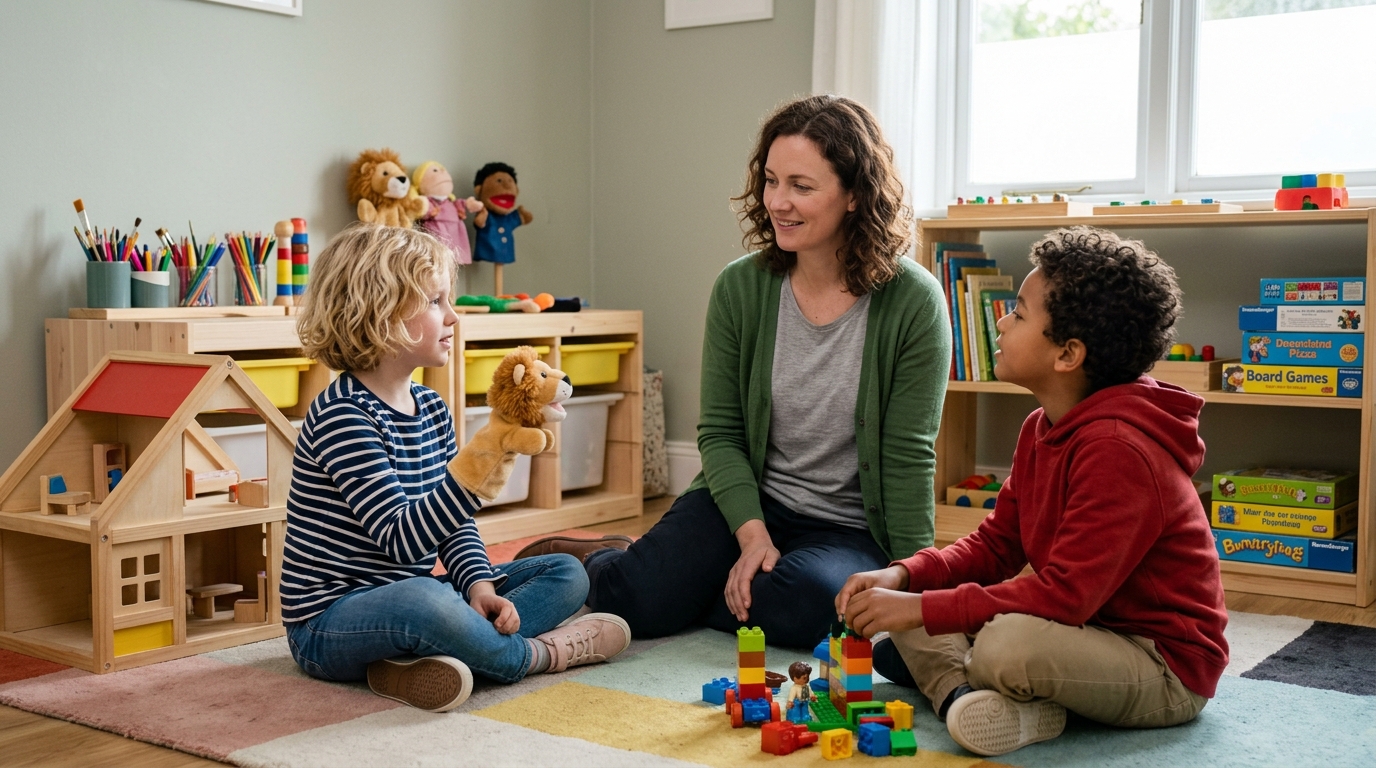
Young children can’t always put their feelings into words. An overwhelmed four-year-old rarely says, “I’m anxious about the move.” Instead, it comes out in behavior, tears, or silence. That is where the importance of play therapy becomes clear. Play is a child’s natural language, so it opens a door to communication that talking alone can’t. Through dolls, toys, and drawings, a child can act out situations that feel too big or too scary to describe. With a safe adult nearby and support from family, those feelings finally have somewhere to go.
What Is Play Therapy?
Many parents want to know what play therapy is before they book a first session. In short, it is a form of counseling where a trained therapist uses play to help a child communicate, process emotions, and feel safe. The therapist might bring out dolls, drawing supplies, sand trays, and other tools. The child creates the scene, and the therapist guides the play to support healthier emotional patterns. Over time, this helps kids connect with others, open up, and carry less stress from difficult experiences. Most referrals in routine practice involve children aged four to twelve, though younger children and teens can benefit too. The research backs it up.
Play-based therapy is always tailored to the child:
- It reflects the child’s age, struggles, and life experiences.
- The therapist uses toys, art supplies, and sand to deepen the play.
- Emotional and creative activities build self-esteem and lower barriers.
- Specific strategies build trust and ease stressful moments.
How Does Play Therapy Work?
Children don’t play in therapy just for fun. They play to make sense of what is happening inside them. So how does play therapy work in practice? It follows a few steady elements:
- Observation. The therapist watches what the child chooses, how they play, and how they behave.
- Reflection. The therapist gently puts words to the feelings the child shows through play and mood.
- Nondirective play. The child leads, and the therapist builds a safe, comfortable space around them. This is the heart of child-centered play therapy.
- Duration. A session typically lasts about an hour, with regular check-ins between parents and therapist. Play-based therapy gives a child room to work through specific struggles and express real feelings.


What Is Play Therapy Used For?
Parents often ask what play therapy is used for. The short answer: it supports children through change and struggle, whether the issue is behavioral, social, or emotional. It helps when life shifts, or a child’s temperament seems to change. Common uses include:
- Reducing stress and easing reactions to triggers.
- Creating a safe space where a child can open up and learn boundaries.
- Exploring school, daycare, or family situations that weigh on a child.
- Coping with stress from financial strain, divorce, or social problems.
- Lowering aggression while building self-esteem and emotional well-being.
- Helping children with autism connect with the people around them. Play gives them a place to be themselves, which matters given how draining autism masking can become over time.
Common Play Therapy Techniques
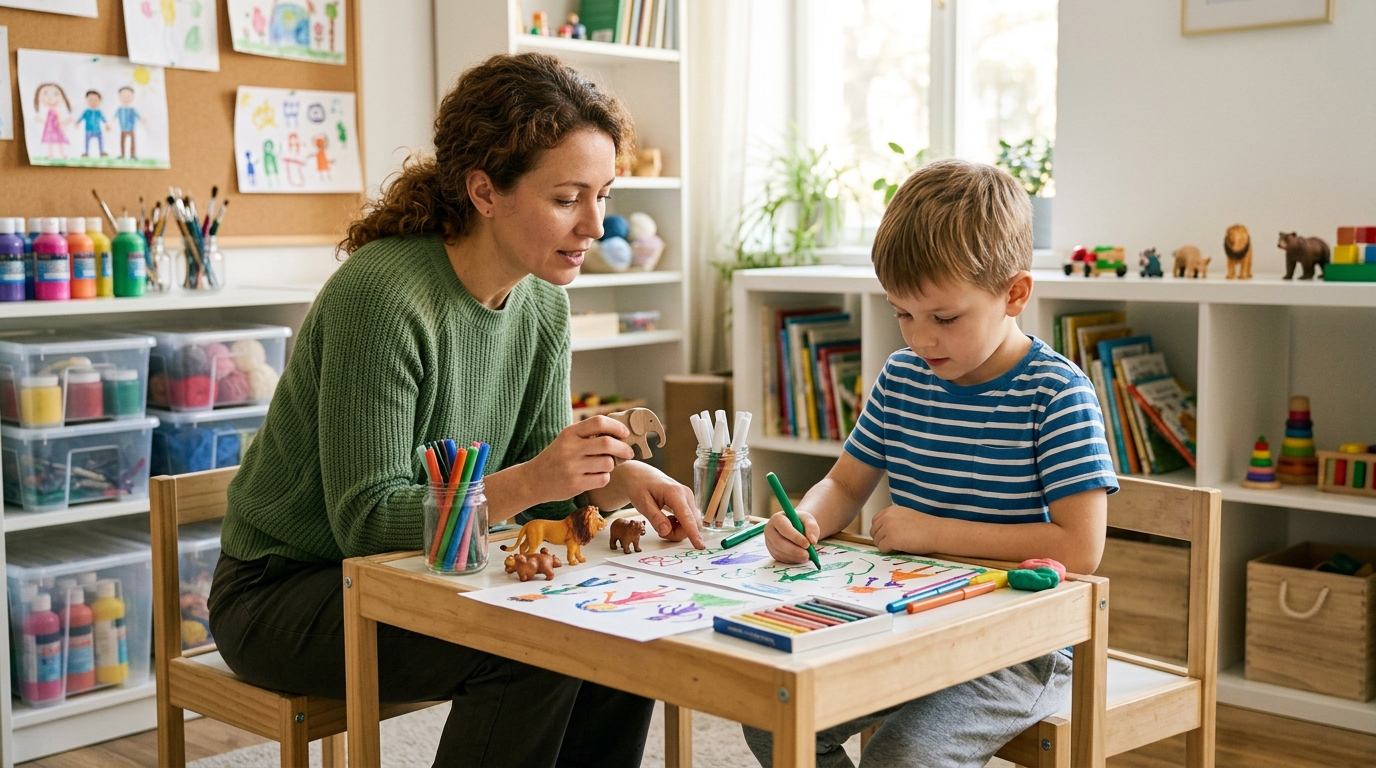
Therapists choose from several play therapy techniques, depending on a child’s age, needs, and personality. Some sessions lean creative and symbolic; others are more openly emotional. Common play therapy techniques include:
- Sand. Building scenes in a sand tray lets a child show inner experiences without needing words.
- Dolls. Dolls help children act out everyday situations and relationships.
- Drawing. Drawing is an easy, engaging way to express feelings and experiences.
- Storytelling. The child and therapist create stories together with made-up characters.
- Parental involvement. In Child Parent Relationship Therapy, parents learn to use these skills at home. That matters because the same meta-analysis found that involving parents produced the largest effects.
Play Therapy Examples: What a Session Might Look Like
A few play therapy examples show how this looks in a real room. Picture a six-year-old whose parents are divorcing. She never says a word about it, but she lines up two dolls at opposite ends of the dollhouse and puts a smaller doll alone in the middle. The therapist doesn’t correct her. The therapist notes, “That little one looks like she’s stuck in the middle.” Often, that is the moment a child feels understood.
Other typical examples include:
- Dolls and props help children role-play school scenes and real-life situations.
- Drawings let children point to what worries them and show a real emotional problem.
- Sessions where parents join in help the therapist see what triggers the child and how to respond.
Benefits of Play Therapy for Children and Families
The importance of play therapy shows up in the numbers, too. A review of 52 controlled studies on child-centered play therapy found a moderate, statistically significant benefit. Beyond the research, the daily changes matter most. Play supports a child’s emotional and physical development and offers a safe space to feel and talk. Gradually, kids learn to tell emotions apart and manage them, defend their boundaries, and handle stress. Families notice fewer triggers and stronger relationships. Because every child brings a different story, the work is always individualized. The importance of play therapy lies in that gentle, personal approach, where a child picks up real skills one session at a time.
Play Therapy at Start My Wellness
Parents who understand what play therapy is and its benefits often take the next step. Start My Wellness offers therapists trained to work with children, along with options like Child Parent Relationship Therapy. Families can also access child therapy, anger management therapy, and online therapy for children. Sessions are available in person at our Michigan locations or online, so families can choose what fits their routine. Our team also helps you check insurance coverage and costs before you begin. Schedule a consultation ahead of time or call (248) 514-4955, and start supporting your child’s emotional well-being.