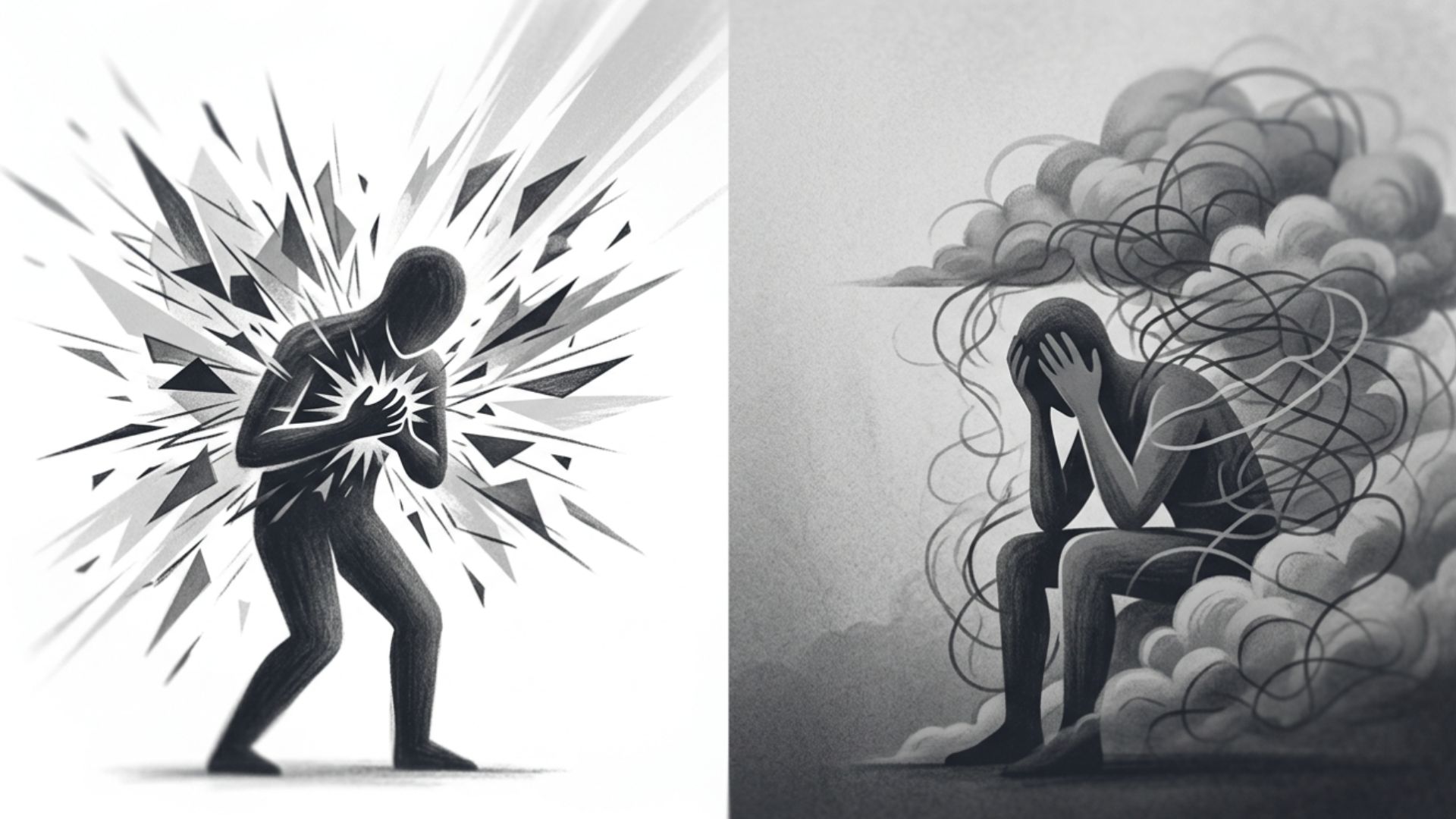
There’s a moment a lot of people describe the same way: heart pounding, chest tight, mind spinning, and no idea what’s actually happening to their body. Some are convinced they’re having a heart attack. Others just know something is deeply wrong, but can’t name it. Understanding the distinction between a panic attack vs anxiety attack isn’t just clinical trivia. It changes how you respond in the moment, what kind of help you seek, and how quickly you can start feeling better.
At Start My Wellness, this is one of the most common topics that comes up – both in initial consultations and in ongoing therapy. People arrive having Googled their symptoms for weeks, still unsure what they experienced. So let’s make it clear.
What Is a Panic Attack and What Does It Feel Like
A panic attack is sudden. That’s the word that comes up most suddenly. One moment you’re fine; the next, your body is in full alarm mode with no obvious reason why.
The signs of a panic attack are physical and intense:
- Racing or pounding heartbeat that feels impossible to ignore
- Chest pain or pressure, often mistaken for a cardiac event
- Shortness of breath, a sense of choking or smothering
- Dizziness, shaking, or a strange feeling of unreality
- Numbness or tingling in the hands or face
- An overwhelming sense that something terrible is about to happen
Most panic attacks peak within 10 minutes and resolve within 20. But that window feels much longer when you’re in it. What causes a panic attack varies – accumulated stress, disrupted sleep, dehydration, stimulants like caffeine, or sometimes nothing identifiable at all. That last part is what makes them particularly disorienting: the absence of a clear trigger. The fear arrives without an obvious invitation.
Panic attack causes can also be biological. People with a sensitized nervous system – often from chronic stress or past trauma – may fire the alarm response more easily than others. This isn’t a character flaw. It’s physiology.
What Is an Anxiety Attack and How Does It Differ
A silent anxiety attack looks different from the outside and feels different from the inside. There’s no sudden spike. Instead, tension builds gradually, often over hours, fed by a specific stressor or cluster of worries. Deadlines, relationship conflicts, financial pressure, health concerns – anxiety finds its fuel wherever it can.
Where a panic attack announces itself dramatically, anxiety often stays under the surface. People experiencing it may appear completely fine to those around them while internally managing racing thoughts, muscle tightness, difficulty concentrating, and a persistent sense of dread. This is why it’s sometimes called “silent” – the internal experience is loud, but the external presentation isn’t.
Key Differences at a Glance
When comparing panic attack vs anxiety attack, these are the markers that matter most:
| Panic Attack | Anxiety Attack | |
| Onset | Sudden, rapid peak | Gradual build up |
| Duration | Usually under 20 minutes | Can last hours or days |
| Trigger | Often none | Usually tied to a stressor |
| Primary symptoms | Physical (chest pain, racing heart) | Emotional and physical tension |
| Clinical term | Yes – defined in DSM-5 | Not a formal diagnosis |
The symptoms of a panic attack vs anxiety attack overlap in some areas – both involve fear, physical discomfort, and difficulty thinking clearly. Still, the pattern is different enough to guide different responses.
Understanding the difference between an anxiety attack and a panic attack also matters for treatment. What helps most in a panic attack may not be the first tool to reach for during an anxiety episode, and vice versa.
What to Do in the Moment
The instinct most people have during a panic or anxiety episode is to fight it – to make it stop through sheer force of will. This almost always backfires. Resistance amplifies the physical response. Here are ways to calm anxiety attacks and panic episodes that actually work:
- Grounding (5-4-3-2-1): Name 5 things you can see, 4 you can touch, 3 you can hear, 2 you can smell, 1 you can taste. This interrupts the spiral by anchoring attention to the present moment.
- Controlled breathing: The 4-7-8 technique (inhale for 4 counts, hold for 7, exhale for 8) directly engages the parasympathetic nervous system – the body’s built-in calm-down response.
- Acceptance over resistance: Telling yourself “this is uncomfortable but not dangerous, and it will pass” reduces the fear-of-fear loop that prolongs attacks.
- Movement: For anxiety, gentle walking can discharge physical tension more effectively than sitting still.
- Progressive muscle relaxation: Tensing and releasing muscle groups in sequence helps the body recognize and exit a stress state.
- Avoid caffeine: During an episode – and if attacks are frequent – caffeine is a genuine trigger worth eliminating or reducing.
One important note: if chest pain is severe or if you experience fainting, seek medical evaluation first. Rule out physical causes before assuming panic.
Treatment Options for Panic and Anxiety
Both conditions respond well to treatment. The symptoms of a panic attack vs anxiety attack may differ, but the therapeutic tools often overlap, with some important variations.
- Cognitive Behavioral Therapy (CBT) is the most evidence-backed approach for both conditions. It helps identify the thought patterns that feed anxiety and panic, and builds practical skills to interrupt them. This is core to how our therapists at Start My Wellness approach this work.
- Exposure therapy is particularly effective for panic disorder – gradually and safely reducing the fear response to situations or sensations that trigger attacks.
- Medication: Panic attack treatment may include SSRIs, SNRIs, or short-term benzodiazepines, depending on frequency and severity. Anxiety attack treatment follows a similar framework, with medication used alongside therapy rather than instead of it.
- Lifestyle: Sleep quality, exercise regularity, and caffeine intake have a measurable impact on both conditions. These aren’t minor lifestyle tweaks – they’re part of the treatment architecture.
If you’re unsure where to start, our team can help you figure that out. You can find a therapist at Start My Wellness based on your specific symptoms, availability, and whether you prefer in-person or telehealth sessions.
Frequently Asked Questions
Can you have a panic attack and an anxiety attack at the same time?
Yes. Severe, prolonged anxiety can tip into a panic attack – the difference between an anxiety attack and a panic attack becomes blurry when anxiety reaches a peak. Treating both the underlying anxiety and the panic response is usually the most effective approach.
Are panic attacks dangerous?
Not physically, even though they feel that way. The signs of a panic attack – chest pain, racing heart, breathlessness – mimic serious medical events but aren’t dangerous on their own. That said, the fear of having another one can significantly affect daily life, which is exactly why treatment matters.
How do I know if I need medication?
If attacks are disrupting sleep, work, or relationships, that’s worth a professional evaluation. Medication isn’t the only option, but for some people it’s what makes therapy possible in the first place.
Can teenagers experience panic attacks?
Absolutely. Panic attack causes in adolescents are often tied to academic pressure, social stress, and family dynamics. Early support makes a significant difference. Start My Wellness works with teens and adults – you can explore our services here.
When should I see a therapist?
If attacks are happening more than once, or if you’re changing your behavior to avoid triggering one – that’s the signal. Earlier is always better than waiting for things to escalate.