
DBT gets mentioned a lot in therapy conversations, usually in the same breath as CBT, and is rarely explained clearly enough to know what it actually involves. DBT skills are a specific, structured set of tools developed by psychologist Marsha Linehan for people whose emotional experiences felt too intense to manage with standard approaches. The framework has expanded well beyond its original application. This guide covers what DBT is, how it compares to CBT, what the core skills actually teach, and when it tends to help most.

What Is Dialectical Behavior Therapy (DBT)?
DBT was originally developed to treat borderline personality disorder. It’s now used broadly for depression, anxiety, eating disorders, PTSD, and anyone who feels overwhelmed by emotions they can’t seem to regulate.
The “dialectical” part refers to a central tension the therapy holds together: accepting yourself as you are right now, while simultaneously working to change. Those two positions feel like they’re in conflict. DBT treats them as equally necessary. The DBT skills model was built on this premise because Linehan noticed that pure change-focused therapy felt invalidating to people with intense emotional experiences, while pure acceptance led nowhere. Both had to be present at the same time.
DBT vs. CBT: What’s the Difference?
Both work with thoughts and behaviors, and they share more than the names suggest. DBT vs. CBT comes down to emphasis and structure.
CBT is primarily focused on identifying unhelpful thought patterns and changing them. It’s relatively direct and well-suited to specific, identifiable problems like a phobia, panic disorder, or depression with clear negative thought cycles.
DBT vs. CBT becomes most meaningful when emotions are so intense that standard cognitive work doesn’t get traction. DBT adds what CBT doesn’t always include: explicit skills training around tolerating distress, regulating intense emotions, and communicating needs in relationships without burning them down. It also incorporates mindfulness throughout as a foundational practice. For people who have tried CBT and found it helpful but not quite sufficient, DBT often addresses what was missing.
The Four Core DBT Skills
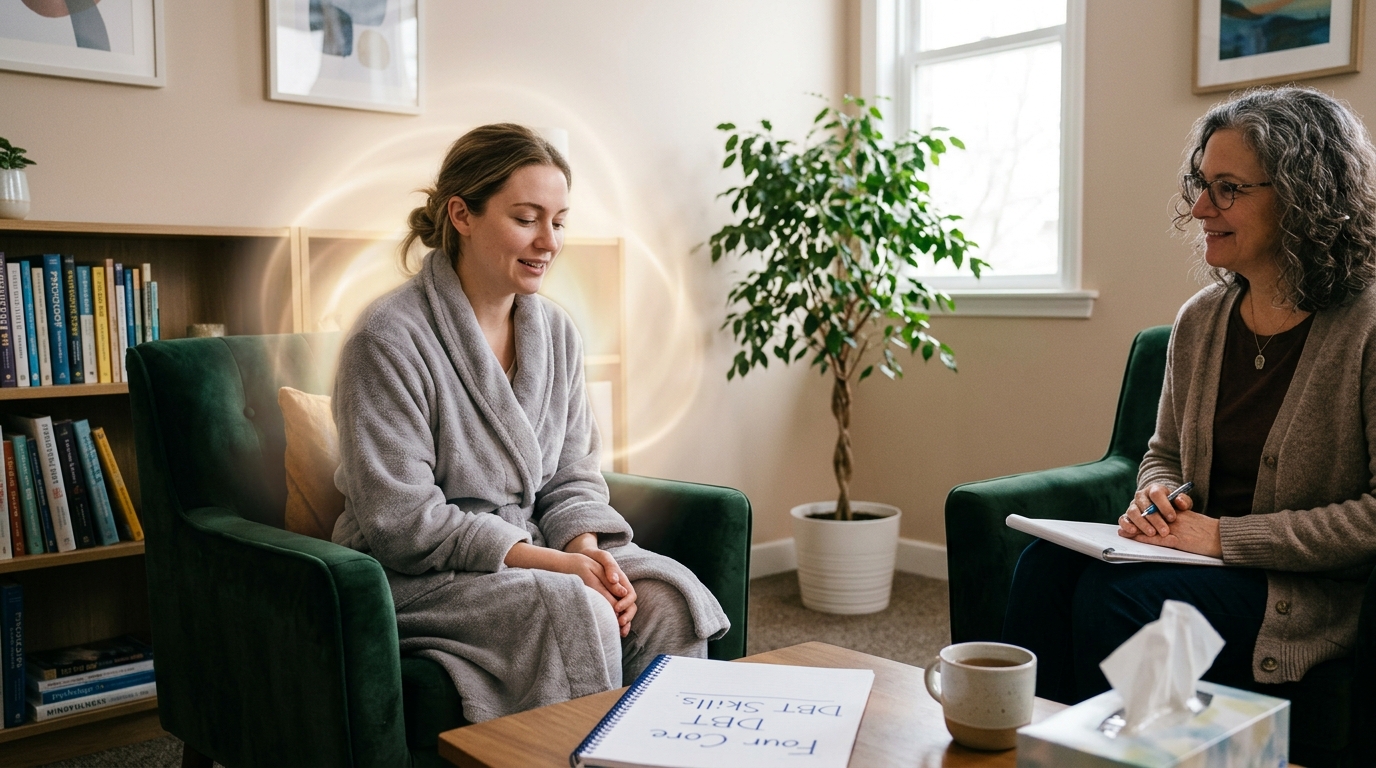
DBT techniques are organized into four modules, each targeting a different dimension of emotional life. They’re taught as practical, repeatable skills rather than abstract concepts.
- Mindfulness is the foundation everything else builds on. It’s the ability to observe what’s happening in your mind and body without immediately reacting. Most of the other skills depend on some capacity to pause and notice before acting.
- Distress tolerance teaches people to get through a crisis without making it worse. The goal isn’t to solve the problem at the moment. It’s to survive the intensity without doing something impulsive that creates new problems.
- Emotional regulation builds the ability to understand what triggers your emotions, reduce vulnerability to intense emotional states over time, and respond rather than react when something activates you.
- Interpersonal effectiveness focuses on how to ask for what you need, set limits clearly, and maintain relationships without either abandoning your own position or steamrolling the other person.
These aren’t concepts to understand once and check off. They’re methods people practice until they become usable under pressure, which takes time.
Radical Acceptance and Distress Tolerance
Radical acceptance is one of the most discussed ideas in DBT and one of the most misunderstood. It doesn’t mean agreeing that something painful is okay, or giving up on changing it. It means stopping the internal fight against the reality that it happened.
When something difficult is real, resisting that reality doesn’t reduce the pain. It adds a second layer of suffering on top of the first: the pain of the situation plus the pain of fighting against the fact that it exists. Radical acceptance is the practice of letting reality be what it is, not so you can ignore it, but so you can respond to it without being consumed by resistance.
DBT distress tolerance skills work alongside this. They give people concrete methods for getting through moments of intense distress intact. Breathing exercises, grounding techniques, deliberate distraction, and self-soothing activities are all part of this module. The aim is making it to the other side of the moment without making it worse.
Using DBT for Anxiety
DBT for anxiety is increasingly common even though DBT was not originally built for anxiety disorders. The skills translate well because anxiety involves the kind of emotional intensity and avoidance patterns that DBT addresses directly.
Mindfulness practice helps people observe anxious thoughts without getting swept into them. Distress tolerance skills give people something concrete to do with anxiety in the moment, rather than avoiding whatever triggered it. Emotional regulation work helps identify what escalates anxiety and builds more flexibility in response.
DBT for anxiety works well alongside other treatments. Many therapists integrate specific DBT tools into broader anxiety work rather than following a strict DBT protocol. If you want context on how this fits with other approaches, our CBT vs. talk therapy guide covers the broader landscape of therapy options.
Start DBT-Informed Support at Start My Wellness
Learning DBT skills takes repetition before they become available under real pressure. But they do become available, and for people who have felt like their emotions run the show, that shift is significant.
At Start My Wellness, our therapists are trained in DBT techniques and incorporate them based on what each client actually needs, rather than following a rigid protocol regardless of fit. If you’ve been dealing with intense emotions, anxiety, relationship difficulties, or reactions that feel bigger than the situation warrants, DBT-informed therapy is worth exploring. Schedule a first session or call 248-514-4955 to get started.