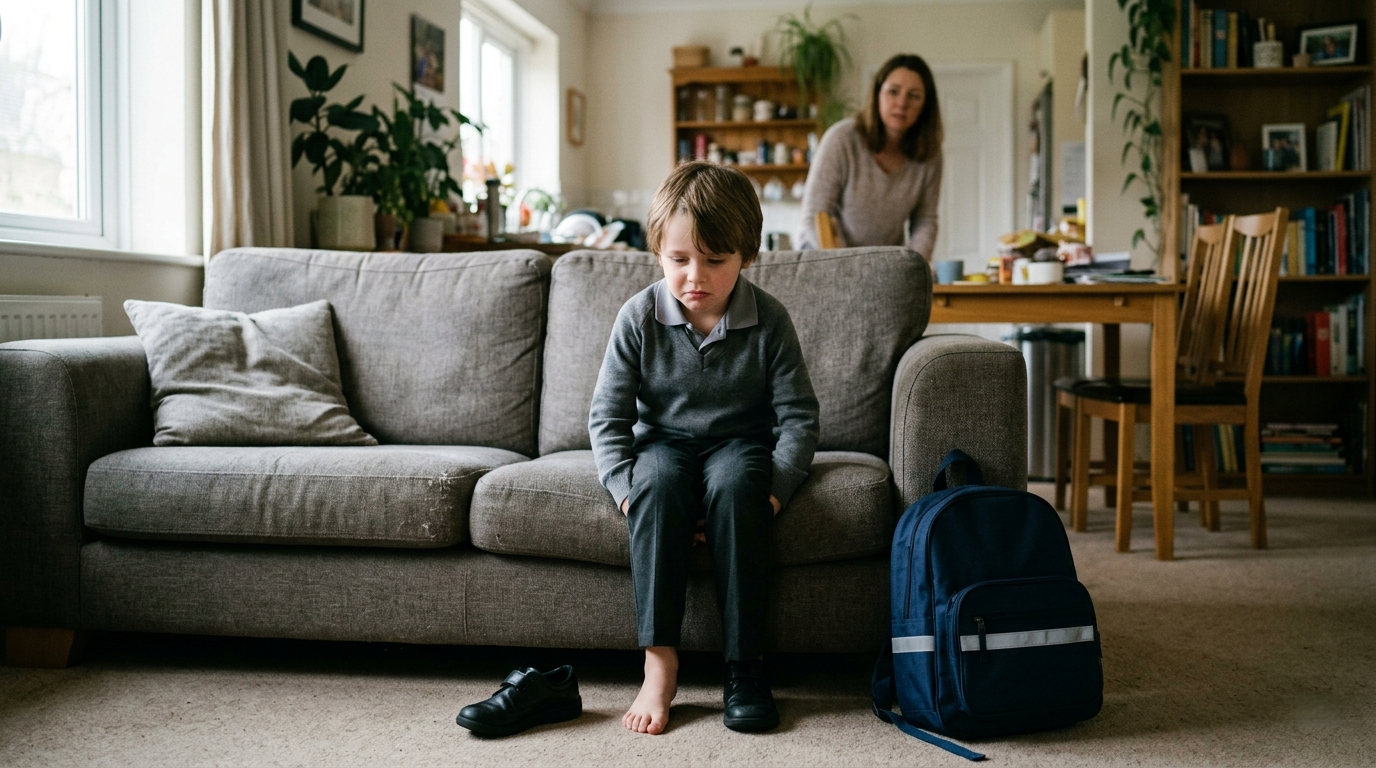
Mornings can turn into a fight without warning: tears over cereal, a stomach that suddenly hurts, a kid rooted to the couch who won’t put on shoes for anything. Does that sound like your house lately?
If so, you haven’t done anything wrong. This happens in more families than people admit out loud, and most of the time it comes down to anxiety, not stubbornness. So what is school refusal, exactly, and why does it happen? Below is a plain look at the signs, the causes, and what tends actually to work.
What Is School Refusal?
School refusal is when a child keeps struggling to get to school, or to stay once there, and the reason underneath is real emotional distress, not defiance for its own sake. Most kids caught in this want to keep up with their classmates and do fine. Their body just refuses to cooperate. And parents, for what it’s worth, almost always know exactly where their child is. Nobody’s sneaking off.
There’s a related term worth knowing: school avoidance, which covers dodging school entirely or avoiding just one piece of the day, like the bus, the cafeteria, or a particular class. Some kids fall into this fast, right after a single bad day. For others, it builds slowly, tied loosely to a new grade, a new building, or coming back after time away.
Signs Your Child May Be Struggling
Ask a child directly why they don’t want to go, and odds are you won’t get much of an answer. The real signal tends to come out sideways: through the body, through mood, through habits that don’t look connected to school at first glance.
Some patterns worth watching:
- Stomachaches or headaches that show up on school mornings and clear by the weekend.
- Restless nights, especially Sundays, or a heaviness before the alarm goes off.
- Clinginess, sudden tears, or a shorter fuse near drop-off time.
- Frequent trips to the nurse, or long stretches in the bathroom between classes.
- Pleading, negotiating, or simply refusing to walk out the door.
These are common child anxiety symptoms, and they’re worth taking seriously rather than waving off as excuses. School anxiety can also zero in narrowly on one specific thing: cafeteria noise, one particular classmate, having to speak in front of the room. A single morning doesn’t mean much on its own. It’s the repeat pattern that tells you something is going on.


What Causes School Refusal and Separation Anxiety?
Rarely is there one clean cause. Usually a few things stack together. Anxiety sits at the center of most of it, and in younger kids that often looks like not wanting to be away from a parent. Left unaddressed, that fear can grow into separation anxiety disorder, a recognized and treatable condition that responds well to early support.
Plenty of other things play a role too: bullying, friction with classmates, schoolwork that feels like too much, an undiagnosed learning difficulty, an embarrassing moment that stuck around longer than it should have, or stress at home. Bigger transitions count as well, including a new school, a friendship that fell apart, or a long stretch of illness that kept a child out of class for weeks.
There’s a quieter angle here too. Home can start to feel safer than school, and staying there gets reinforced, not on purpose, but because skipping the hard thing brings relief, at least for that day. What matters most is figuring out what’s actually driving the school anxiety, since the right kind of help depends on the real cause rather than just what’s visible on the surface.
How to Help: School Refusal Treatment
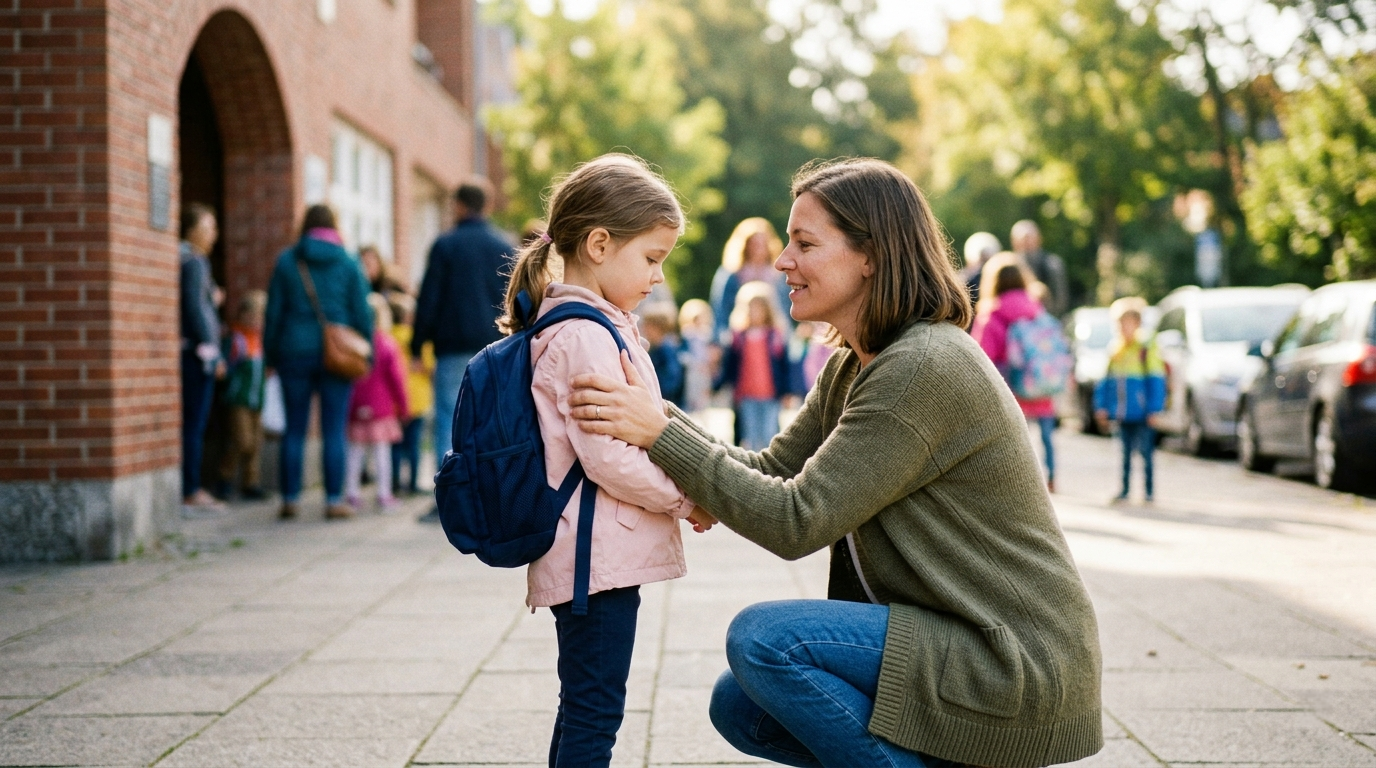
Start at home. Small, consistent shifts count for more than most parents expect. Staying calm but holding a firm line beats both yelling and caving; kids notice the difference. A predictable morning routine takes some of the edge off a day that already feels shaky. Listening first when your child talks about what scares them, rather than rushing to solve it, builds the kind of trust that makes the next conversation easier. And nudging toward small steps back into class beats letting a missed day stretch into a missed week, since avoidance only tends to build the longer it sits.
Loop the school in too. A counselor or teacher can often map out a gradual return, or arrange a quiet check-in point during the day, so your child doesn’t feel like they’re facing it alone.
When home strategies aren’t enough, school refusal treatment usually points toward cognitive behavioral therapy: a structured approach that helps kids face specific fears in small doses while building tools for managing anxious thoughts. Bringing family into sessions tends to make the work stick longer. If a learning difficulty seems mixed in, a fuller ADHD and psychological evaluation can help clarify what’s actually going on underneath the behavior. The goal of school refusal treatment was never to force attendance. It’s helping a child feel steady enough to walk through the door themselves.
When to Seek Support and How Start My Wellness Can Help
Reach out if the refusal has gone on for a few weeks, if the distress looks severe, or if nothing at home or school has moved the needle. That’s not failure. It’s usually the step that gets things unstuck.
Start My Wellness offers therapy for children and teens experiencing school refusal, along with family support and psychological testing when a fuller picture would help. Our clinicians address the child’s anxiety symptoms underneath rather than just the behavior on the surface, working at a pace that actually fits the child. We see kids in person at our Ferndale clinic and online across Michigan. If mornings have turned into a daily struggle, scheduling a first appointment is a reasonable next step.