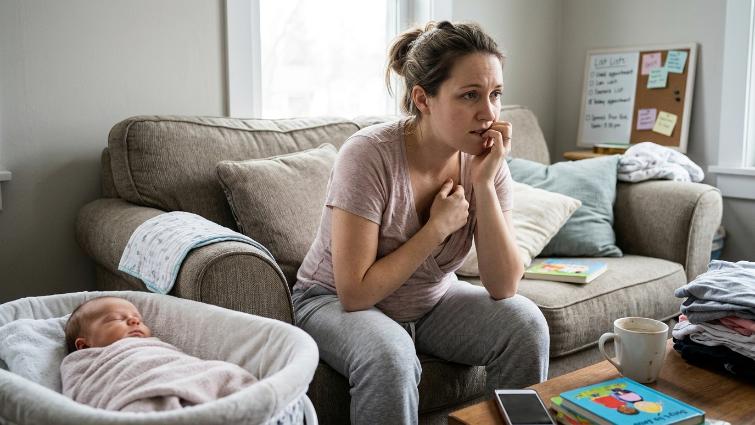
Most people expect to feel some version of overwhelmed after a baby arrives. What they don’t always expect is the anxiety that settles in and doesn’t leave. Not ordinary new-parent worry, but something that runs underneath everything, coloring every decision, making the nights longer than they already are. Postpartum anxiety is one of the most common experiences new mothers face, and one of the least talked about. Understanding what it actually is makes it significantly easier to do something about it.

What Is Postpartum Anxiety?
Postpartum anxiety refers to persistent, often overwhelming worry that develops after giving birth. It’s different from normal new-parent concern, which most people would describe as manageable and situation-specific. Anxiety at this level tends to feel constant, and it’s harder to turn off. It affects sleep even when the baby is finally sleeping. It makes relaxation feel impossible. It follows you through the feedings and the quiet moments and the middle-of-the-night checks that weren’t strictly necessary.
A few things worth knowing. It can appear in women with no prior history of anxiety. It can affect fathers and non-birthing parents too, though it’s most commonly discussed in the context of mothers. And postpartum anxiety is treatable. It doesn’t resolve by pushing through and waiting it out. But it does respond, often quite well, to the right support.
Postpartum Anxiety vs. Postpartum Depression
People sometimes assume these are the same condition, or that one is simply a more serious version of the other. They’re distinct experiences, though they can and frequently do occur at the same time.
Postpartum anxiety centers on fear, worry, and a persistent sense of threat. The mental experience tends to feel like a running loop of worst-case scenarios. Physically, it often shows up as a racing heart, tight chest, and muscle tension that won’t ease. Postpartum depression, by contrast, is characterized by sustained sadness, hopelessness, disconnection, and low energy. Depression tends to quiet a person down. Anxiety tends to rev them up.
If both are present, getting a clear clinical picture matters. Treatment approaches differ, and what helps one condition doesn’t automatically address the other.
Signs and Symptoms of Postpartum Anxiety
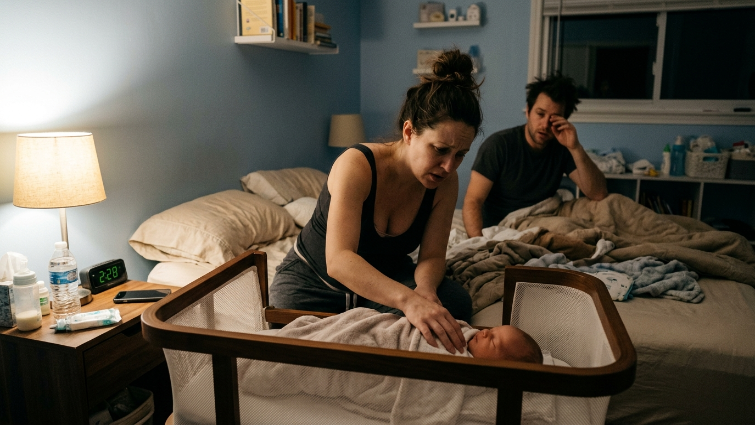
The signs of postpartum anxiety aren’t always what people expect. Most people anticipate panic attacks or obvious visible distress. But postpartum anxiety symptoms often look quieter than that, and easier to explain away as just being a tired new parent.
Common presentations include:
- Constant worry that something will go wrong with the baby, even when nothing suggests it will.
- Difficulty sleeping when you finally have the opportunity, because the mind won’t stop cycling through scenarios.
- Irritability that feels out of proportion, sometimes building into intense anger, which many people describe as postpartum rage.
- A strong need to control the environment as a way of managing the anxiety underneath.
- Physical symptoms include headaches, nausea, chest tightness, and an exhaustion that doesn’t lift with rest.
Postpartum intrusive thoughts are also part of this picture for many women. These are unwanted, disturbing mental images or scenarios, often involving harm to the baby. Having these thoughts does not mean you are dangerous or a bad mother. They are a recognized symptom of anxiety, and they are far more common than most people realize. The distress they cause is itself evidence that they conflict with what you actually want. If intrusive thoughts are a significant part of what you’re experiencing, our guide to intrusive thoughts explains what drives them and how therapy addresses them specifically.
What Causes It and How Long It Lasts
No single cause drives postpartum anxiety, which is part of what makes it difficult to predict. Hormonal shifts in the weeks following birth affect mood, sleep, and stress response in significant ways. Sleep deprivation compounds everything it touches. A personal or family history of anxiety disorders increases the risk. So does a history of pregnancy loss, a difficult birth, or perinatal anxiety that developed during pregnancy and carried forward.
How long postpartum anxiety lasts depends largely on when support begins. For some women, postpartum anxiety symptoms improve meaningfully within a few weeks when they have adequate rest, support from people around them, and space to acknowledge what’s happening. For others, anxiety persists for several months. The pattern of hoping it will resolve on its own and waiting tends to extend the timeline rather than shorten it.
Treatment and Coping Strategies
Postpartum anxiety treatment is not a single thing. What helps one person significantly may not be what another person needs, and an individualized approach consistently produces better outcomes than a generic protocol.
Therapy, particularly Cognitive Behavioral Therapy, is well supported for anxiety in the postpartum period. It helps women identify the specific thought patterns driving the anxiety and build more effective responses to them. Medication is worth an honest conversation with a clinician if anxiety is severe or not responding to therapy; several options are considered safe during breastfeeding and can make a meaningful difference when the anxiety is significant. You can read more about how individual therapy at Start My Wellness approaches anxiety treatment if you want a clearer picture of what sessions actually look like.
Outside of formal postpartum anxiety treatment, a few things genuinely move the needle:
- Getting rest where it’s actually possible, which often means accepting help rather than managing everything independently.
- Reducing the pressure to be constantly engaged with parenting content online.
- Talking honestly with a partner or trusted person about what’s happening rather than absorbing it alone.
- Physical movement, even short daily walks, consistently helps regulate the nervous system in ways that feel small but add up over time.
When to Get Help and How Start My Wellness Can Support You
Some level of worry after a baby arrives is expected. The question worth sitting with is whether anxiety is running your life or whether you’re still running it.
Reaching out makes sense when postpartum anxiety is present for most of the day and affecting your ability to function. When sleep problems, irritability, or emotional disconnection from the baby are becoming a pattern. When intrusive thoughts are frequent and causing real distress. When anxiety has been present for more than a few weeks without improving. When you’re having thoughts of harming yourself or your baby.
At Start My Wellness, we work with new mothers and parents navigating the postpartum period, both in person at our Ferndale clinic and online across Michigan. Our therapists take the time to understand what you’re dealing with specifically and match their approach accordingly. If you’re not sure whether what you’re experiencing warrants support, call 248-514-4955 or schedule a first appointment online. That conversation is a reasonable place to start.